
FOR EVERY MISSION, MORE.
For over 150 years, Texas has called on us to do more: to educate, discover, serve, and take on the missions that strengthen Texas and serve the nation.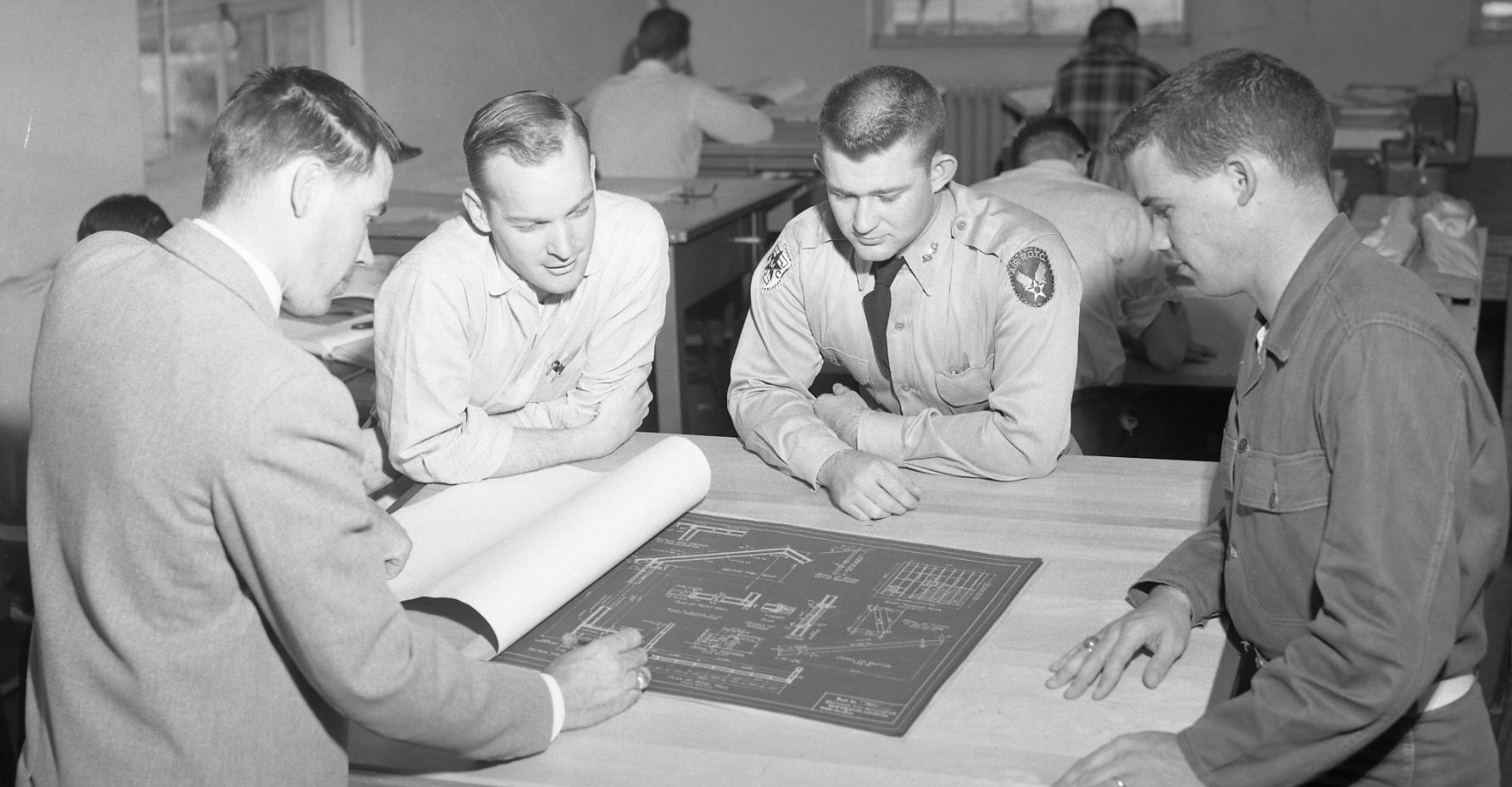
BUILT MISSION BY MISSION
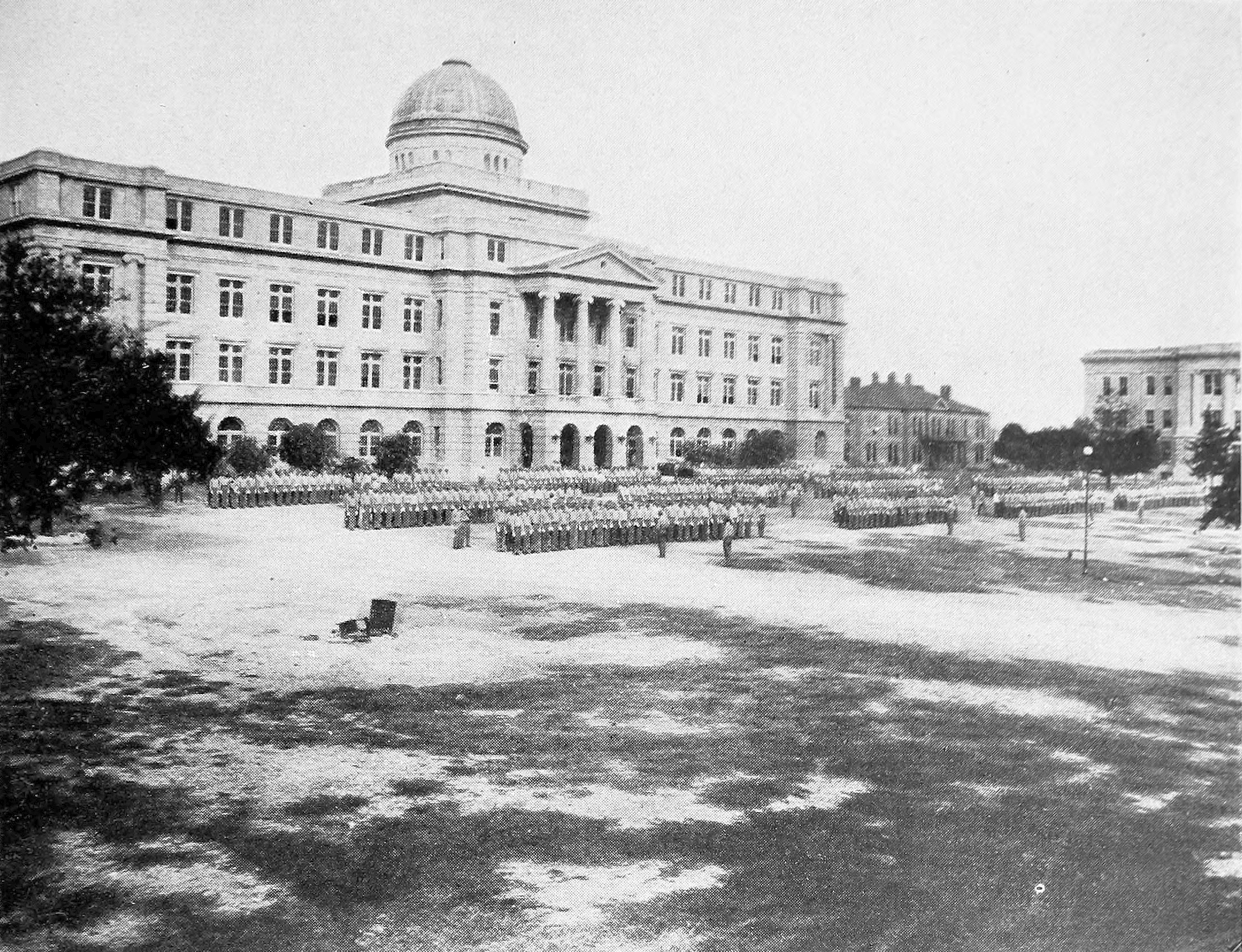
The roots of The Texas A&M University System reach back to 1876 and Texas’ land-grant commitment to education, research, and service. As the needs of Texas grew, so did the mission. New capabilities in agriculture, engineering, extension, and forestry carried knowledge beyond the campus and across the state. In 1948, those growing missions came together with the formal establishment of The Texas A&M University System. In the decades that followed, new universities, state agencies, and campuses expanded its reach and capabilities even further: from land, to sea, to space, and into communities across Texas. Today, that history has created an enterprise built to put knowledge to work, solve consequential problems, lead Texas, and serve the nation.
1876: A LEGACY BEGINS
Texas A&M University opens as the Agricultural and Mechanical College of Texas, becoming the state’s first public institution of higher education and first land-grant college.
That same year, Texas establishes the institution that would eventually become Prairie View A&M University, later recognized as the state’s second land-grant institution. Together, they begin an enduring tradition of education, research, and service to Texas.
1887–1915: SERVICE EXPANDS BEYOND CAMPUS
The land-grant mission begins reaching Texans far beyond the classroom.
The federal Hatch Act of 1887 leads to the agricultural experiment station that becomes Texas A&M AgriLife Research. The Texas A&M Engineering Experiment Station is established in 1914. In 1915, the Texas A&M AgriLife Extension Service and Texas A&M Forest Service are established, extending research, education, and practical expertise across the state. Together, these missions begin building a distinctive model that combines education, research, and practical service to Texas.
1917: THE UNIVERSITY ENTERPRISE GROWS
John Tarleton College, now Tarleton State University, becomes a branch of the Agricultural and Mechanical College of Texas, extending the educational mission beyond College Station and Prairie View.
1948: THE A&M SYSTEM TAKES SHAPE
The Texas A&M College System, the predecessor of today’s A&M System, is formally established, bringing universities and state agencies together under a coordinated structure.
That same year, the Texas A&M Engineering Extension Service is established, formalizing a growing mission in workforce training and technical assistance that continues today through TEEX.
1950: TRANSPORTATION BECOMES A NEW MISSION
The Texas A&M Transportation Institute is established to apply research and technical expertise to the transportation needs of a rapidly growing state. Chartered by the A&M Board in 1950, TTI builds on decades of collaboration between A&M and the state’s highway department to improve transportation safety, efficiency, and reliability.
1962–1967: NEW MISSIONS REACH THE COAST AND PROTECT ANIMAL HEALTH
The Texas Maritime Academy is formally established by the A&M governing board in 1962, strengthening Texas A&M’s growing marine and maritime presence in Galveston and laying the foundation for today’s Texas A&M University at Galveston. In 1967, the Texas Legislature creates the Texas A&M Veterinary Medical Diagnostic Laboratory to provide diagnostic expertise supporting animal health and Texas agriculture. Its first College Station laboratory opens in 1969.
1971: THE MISSION REACHES THE SEA
Texas A&M becomes one of the nation’s first four designated sea-grant colleges, extending its land-grant tradition of education, research, and public service to marine and coastal challenges.
1989: THE MISSION REACHES SPACE
Texas A&M receives space-grant designation as part of NASA’s National Space Grant College and Fellowship Program, adding space to a mission already rooted in the land and extending to the sea. Today, Texas A&M is one of only 24 institutions nationally with land-, sea-, and space-grant designations.
1989: THE A&M SYSTEM EXPANDS ACROSS SOUTH TEXAS
One of the most significant periods of university expansion in A&M System history begins as Laredo State University, Corpus Christi State University, and Texas A&I University join the A&M System.
They are the institutions known today as Texas A&M International University, Texas A&M University-Corpus Christi and Texas A&M University-Kingsville, dramatically expanding the A&M System’s presence across South Texas and the Gulf Coast.
1990: THE A&M SYSTEM REACHES WEST TEXAS
West Texas State University joins the A&M System Sept. 1, 1990, extending the university network into the Texas Panhandle. In 1993, the institution becomes West Texas A&M University.
1996: THE UNIVERSITY NETWORK EXPANDS EAST
East Texas State University and its Texarkana institution join the A&M System in 1996, becoming Texas A&M University-Commerce and Texas A&M University-Texarkana. Texas A&M University-Commerce later becomes East Texas A&M University in 2024.
1999: A COMPREHENSIVE HEALTH MISSION TAKES SHAPE
The Texas A&M University Health Science Center is established in 1999 as an independent state agency of the A&M System, bringing the College of Dentistry together with medicine and other health-related programs in one comprehensive health institution. In 2013, the Health Science Center transitions into an academic unit of Texas A&M University while maintaining its state agency status.
2009: TWO NEW UNIVERSITIES TAKE ROOT
Two A&M System centers become independent universities. Tarleton State University-Central Texas becomes Texas A&M University-Central Texas, while the Texas A&M University-Kingsville System Center-San Antonio becomes Texas A&M University-San Antonio. Their establishment as standalone universities expands access to public higher education in Central Texas and San Antonio.
2016: A NEW MODEL TAKES SHAPE
The former Riverside Campus is transformed into Texas A&M-RELLIS, creating a place where universities, state agencies, government, and industry can work together across research, testing, technology development, workforce training, and higher education. RELLIS represents a new phase in A&M System growth, focused not simply on adding institutions but on connecting capabilities across the enterprise in new ways.
2018: A NEW ROLE IN NATIONAL SECURITY
The A&M System becomes one of three equal members of Triad National Security, LLC, alongside Battelle Memorial Institute and the University of California. Nov. 1, Triad assumes responsibility for managing and operating Los Alamos National Laboratory for the U.S. Department of Energy’s National Nuclear Security Administration.
2019: ANSWERING THE CALL
The Texas Division of Emergency Management transfers from the Texas Department of Public Safety to the A&M System, becoming its eighth state agency. The addition connects Texas’ statewide emergency management mission with the research, training, and expertise of the broader A&M System, further expanding the ways the enterprise serves and protects Texans.
2024: THE NATIONAL SECURITY MISSION EXPANDS
The A&M System becomes a member of PanTeXas Deterrence, LLC, the team selected by the U.S. Department of Energy’s National Nuclear Security Administration to manage and operate the Pantex Plant near Amarillo, Texas. Nov. 1, PanTeXas Deterrence assumes management and operation of Pantex, extending the A&M System’s direct role in the nation’s Nuclear Security Enterprise.
2025: A 12TH UNIVERSITY JOINS THE A&M SYSTEM
Texas A&M University-Victoria officially joins the A&M System Sept. 1, becoming its 12th university. The addition expands educational opportunity, workforce development, and the A&M System’s presence in the Crossroads and Coastal Bend regions.
2026: A NEW MODEL OPENS IN FORT WORTH
Texas A&M-Fort Worth officially opens its downtown campus, bringing A&M System universities, state agencies, industry, and government together in a new environment for education, research, innovation, and workforce development.

GROWING WITH TEXAS
As Texas changed, The Texas A&M University System changed with it. Universities opened new paths to education. State agencies brought research, training, and practical expertise directly to Texans. New campuses, facilities, and partnerships expanded what the A&M System could do and who it could serve. Through it all, one purpose has endured: put knowledge to work for Texas.
LEADERSHIP THROUGH THE YEARS
For generations, the chancellors of The Texas A&M University System have helped guide a growing network of universities and state agencies with one purpose in mind: serving Texas. Each leader faced the needs of a different time. Together, they helped expand access to education, advance research, and strengthen the A&M System’s ability to serve communities across the state.